
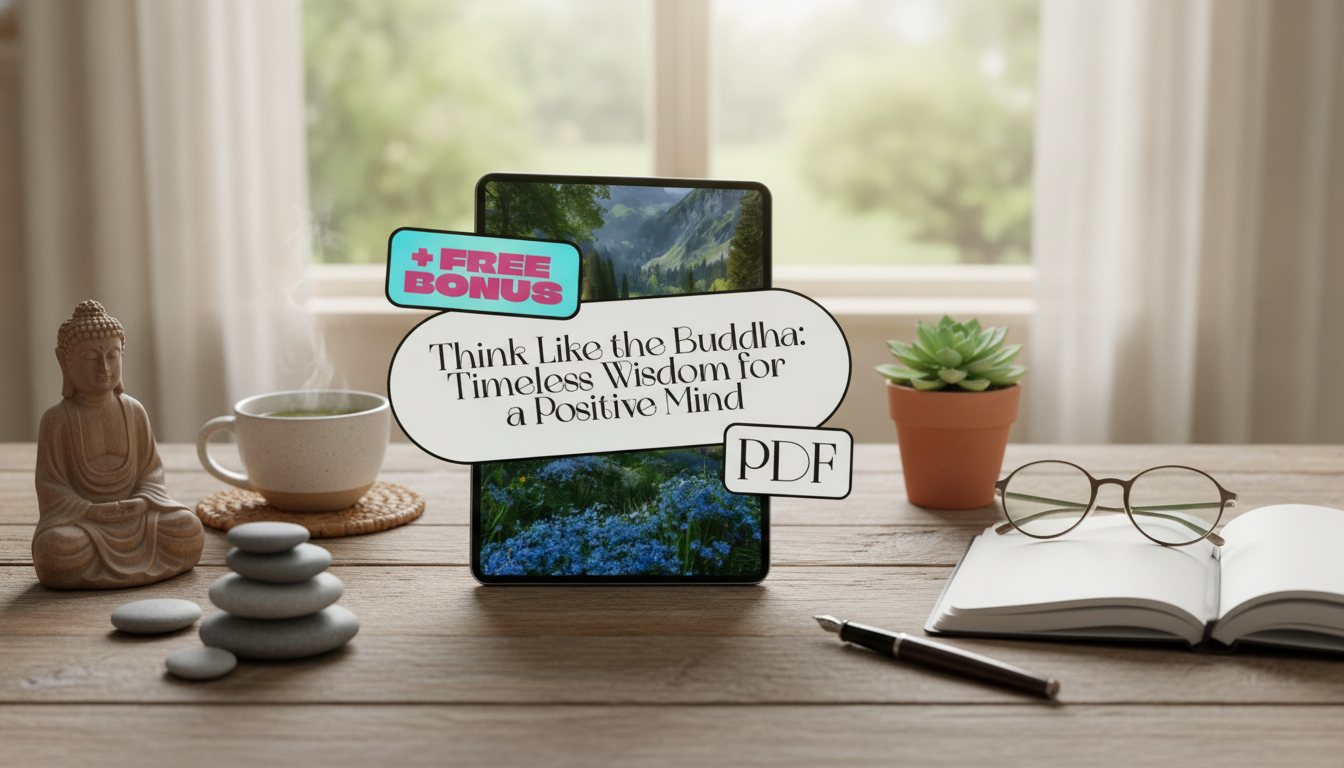
A calm, positive mind is built through small, steady shifts in attention, perspective, and habit. Think Like the Buddha: Timeless Wisdom for a Positive Mind (Digital eBook) gathers Buddha-inspired reflections on positive thinking, mindfulness, joy, and inner peace—meant to be read in short moments and revisited whenever stress, overthinking, or negativity starts to take the lead.
Rather than pushing “good vibes only,” this style of wisdom is grounded in seeing clearly: noticing what the mind is doing, softening harsh reactions, and choosing a steadier next step. If you’re curious about the historical Buddha, Encyclopaedia Britannica provides a helpful overview of Buddha (founder of Buddhism). For a modern definition of mindfulness, see the APA Dictionary of Psychology entry on mindfulness.
Because it’s a digital download, it’s easy to keep close—on a phone, tablet, or laptop—so a helpful line is available right when you need it most.
Positive thinking tends to work best when it’s less about “convincing yourself” and more about returning to what’s real—breath, sensation, values, and the next workable action. Many Buddhist-inspired reflections emphasize awareness first, then wise response.
| Theme | What it helps with | Simple way to practice |
|---|---|---|
| Mindfulness | Overthinking, rushing, distraction | Pause for 3 slow breaths before replying to messages |
| Letting go | Rumination, resentment, control habits | Name what can’t be controlled and choose one small next step |
| Compassion | Harsh self-talk, conflict, irritability | Replace self-criticism with one supportive sentence |
| Joy | Burnout, low mood, dull routines | Notice one pleasant detail and stay with it for 10 seconds |
| Inner peace | Stress, emotional swings | Create a 5-minute quiet window daily (no screens) |
Short passages are powerful when they’re repeated. Instead of trying to “finish” the eBook quickly, a small rhythm turns the words into a usable mental cue—something that shows up automatically when tension rises.
For a quick start, set a repeating reminder titled “one quote, one breath.” The aim is consistency, not duration.
When the mind is loud, prompts give it a skillful direction. They also help separate raw experience (sensations, facts) from the story the mind builds around it. If you’d like a contemporary explanation of mindfulness, Greater Good Magazine at UC Berkeley offers a clear introduction to what mindfulness is.
If you enjoy simple, repeatable routines, it can also pair well with The Relaxation Hypnosis Checklist for Clarity (Digital Guide) as a structured “decompression” companion for evenings or transitions.
For a small, practical digital bundle, consider keeping Think Like the Buddha: Timeless Wisdom for a Positive Mind (Digital eBook) as your daily mindset touchstone, then using the checklist when you want a more guided wind-down.
If you enjoy quick, actionable guides in digital form, The Ultimate Pinterest Power-Up Checklist: Pin Your Way to Marketing Success (Digital Download) offers the same “small steps, consistent rhythm” approach—just applied to content planning instead of mindfulness.
Yes. The quotes and reflections are designed to be read in short sessions, making it easy to start with one passage and build from there. A simple routine is one quote plus three slow breaths.
They support mindful reframing rather than denial: you notice thoughts clearly, loosen the grip of unhelpful interpretations, and choose a wiser response. From that steadier place, it becomes easier to take practical next steps on real issues.
Read one quote in the morning and set a single intention, re-read a short passage midday when stress rises, then choose one line at night to reflect on for a minute. Small, consistent check-ins tend to create the most lasting shift.












Leave a comment