
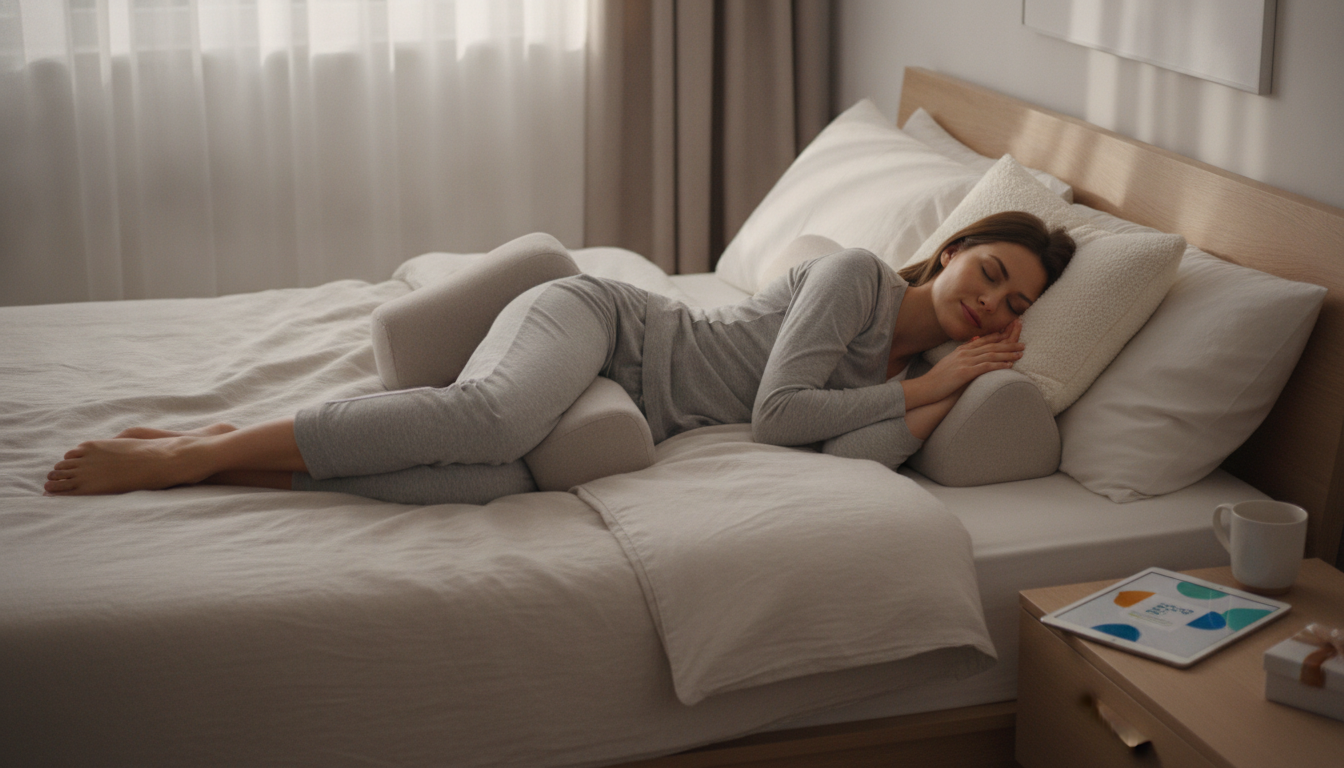
Lower back pain can turn bedtime into a cycle of tossing, stiffness, and waking up worse than before. Small changes—especially sleep position, pillow placement, and a consistent wind-down routine—often reduce nighttime strain on the lumbar spine. The goal is a setup that feels supportive, neutral, and repeatable so your back isn’t fighting your mattress for eight hours.
Nighttime discomfort is often less about “damage” and more about how your back responds to stillness and positioning. Long periods without movement can increase stiffness in joints and surrounding soft tissue—especially after a day of sitting, bending, or lifting.
Sleep positions can also exaggerate lumbar arching (too much extension) or twisting (rotation), stressing facet joints, discs, and the muscles that try to guard the area. A mattress and pillow mismatch can make this worse: if hips sink too far or the waist gap isn’t supported, the spine drifts out of neutral alignment.
Other common amplifiers include stress, dehydration, a warm room, and late-day workouts that leave muscles tight and sensitive overnight. If pain changes noticeably with position, it’s often mechanical irritation. Pain that’s constant and paired with systemic symptoms is a different category and should be assessed promptly by a clinician.
Seek urgent care for new bowel or bladder changes, saddle numbness, fever, unexplained weight loss, severe trauma, or progressive weakness. Call a clinician promptly if pain radiates with significant numbness or tingling, or if night pain is constant and not position-dependent.
For typical mechanical back pain, it’s reasonable to start with alignment changes, gentle mobility, and a consistent routine, then reassess over 1–2 weeks. If pregnancy, osteoporosis, inflammatory arthritis, or recent surgery is involved, confirm sleep-position changes with a clinician.
For general background on low back pain and red flags, see the Mayo Clinic overview and the NINDS low back pain fact sheet.
The main target is neutral alignment: ears, shoulders, and hips in one line, with pillows filling gaps rather than forcing your body flat.
Place a pillow or rolled towel under your knees. This reduces lumbar extension (arching) and often eases facet joint pressure. Keep the head pillow neutral—your chin shouldn’t be pushed down toward your chest.
Place a pillow between your knees (and, if helpful, between your ankles) to keep hips stacked. Hugging a pillow can prevent your top shoulder from rolling forward and twisting the spine. If you have a noticeable waist gap, a small pillow or folded towel there can reduce lateral bending.
Slightly bend knees and hips without curling tightly. Over-flexing can irritate symptoms that travel down a leg in some people. Keep the knee pillow in place to limit pelvic rotation.
Many backs dislike prone sleeping because it increases lumbar extension. If it’s unavoidable, place a thin pillow under the pelvis/lower abdomen and use a very low head pillow to reduce strain.
| Position | Pillow placement | What it helps | Common mistakes |
|---|---|---|---|
| On back | Pillow under knees; head pillow keeps neck neutral | Reduces lumbar arching and facet pressure | Pillow too high under head; legs fully straight all night |
| On side | Pillow between knees; optional pillow at waist gap; hug pillow | Keeps hips stacked; reduces rotation and lateral bending | Top knee sliding forward; twisting shoulders toward mattress |
| Side (with hip tightness) | Between knees + small pillow behind back to prevent rolling | Stability for people who drift to stomach | Over-bending into a tight curl; pillow too thick between knees |
| On stomach (last resort) | Thin pillow under pelvis; very low/flat head pillow | Decreases lumbar extension when prone | High head pillow; no pelvic support; arms overhead causing shoulder strain |
For additional general guidance on back pain, see the NHS back pain overview.
Usually, the most comfortable options are on your back with a pillow under your knees or on your side with a pillow between your knees. The best position is the one that reduces pain overnight and improves morning stiffness without forcing you into an unnatural posture.
Yes for many back sleepers, because it can reduce lumbar arching and pressure in the low back. If it makes your back feel flattened or tense, lower the pillow height or switch to side sleeping with a knee pillow.
Prolonged stillness can increase stiffness, and a sagging mattress or rotated/arched sleep posture can aggravate tissues overnight. Improving alignment with pillow support and adding gentle morning movement often helps; if morning pain persists or worsens, get medical advice.











Leave a comment