
Sleep meditation can turn a restless bedtime into a predictable wind-down—especially when it’s paired with a simple routine that signals safety and rest to the body. Instead of “trying to sleep,” the goal is to lower noise in the mind and dial down physical tension so sleep can arrive on its own schedule. Below is a clear breakdown of what sleep meditation is, how it helps, and how to build a repeatable bedtime routine that feels doable on busy nights.
Sleep meditation is a relaxation practice designed to quiet mental chatter and reduce physiological arousal before sleep. It comes in many formats—guided audio, breath awareness, body scans, progressive muscle relaxation, visualization, and soothing phrases.
It isn’t a performance, a willpower test, or a way to force sleep to happen. The win is creating the conditions where sleep can happen more naturally. If your mind wanders, that’s normal; returning attention to the guide, breath, or body is the practice.
If you’d like a quick overview of meditation approaches and evidence-informed background, the National Center for Complementary and Integrative Health provides a helpful starting point: NCCIH — Meditation.
When sleep feels elusive, it’s often because the nervous system is still in “day mode.” Sleep meditation helps shift you toward calm by slowing breathing, easing muscle tension, and giving the mind a single gentle focus (a voice, counting, imagery, or sensations in the body). Over time, repeating the same wind-down steps can reduce bedtime anxiety by replacing uncertainty with a soothing ritual.
Consistency is a quiet superpower here: the more often you repeat a similar routine, the faster your brain begins to associate it with sleep.
| Style | Best for | Typical length | Simple cue to start |
|---|---|---|---|
| Body scan | Physical tension, restlessness | 10–25 min | Notice jaw/shoulders soften |
| Breath counting | Racing thoughts | 5–15 min | Count exhale cycles from 1–10 |
| Progressive muscle relaxation | Stress held in muscles | 10–20 min | Tense-release feet to face |
| Visualization | Overthinking, nighttime worry | 10–20 min | Picture a calm place in detail |
| Loving-kindness / soothing phrases | Self-criticism, bedtime anxiety | 5–15 min | Repeat a gentle phrase on exhale |
For additional relaxation technique ideas that pair well with meditation, see: Sleep Foundation — Relaxation techniques for sleep.
Sleep meditation is more effective when it’s the final piece of a short “downshift” sequence. Aim for repeatable, not perfect.
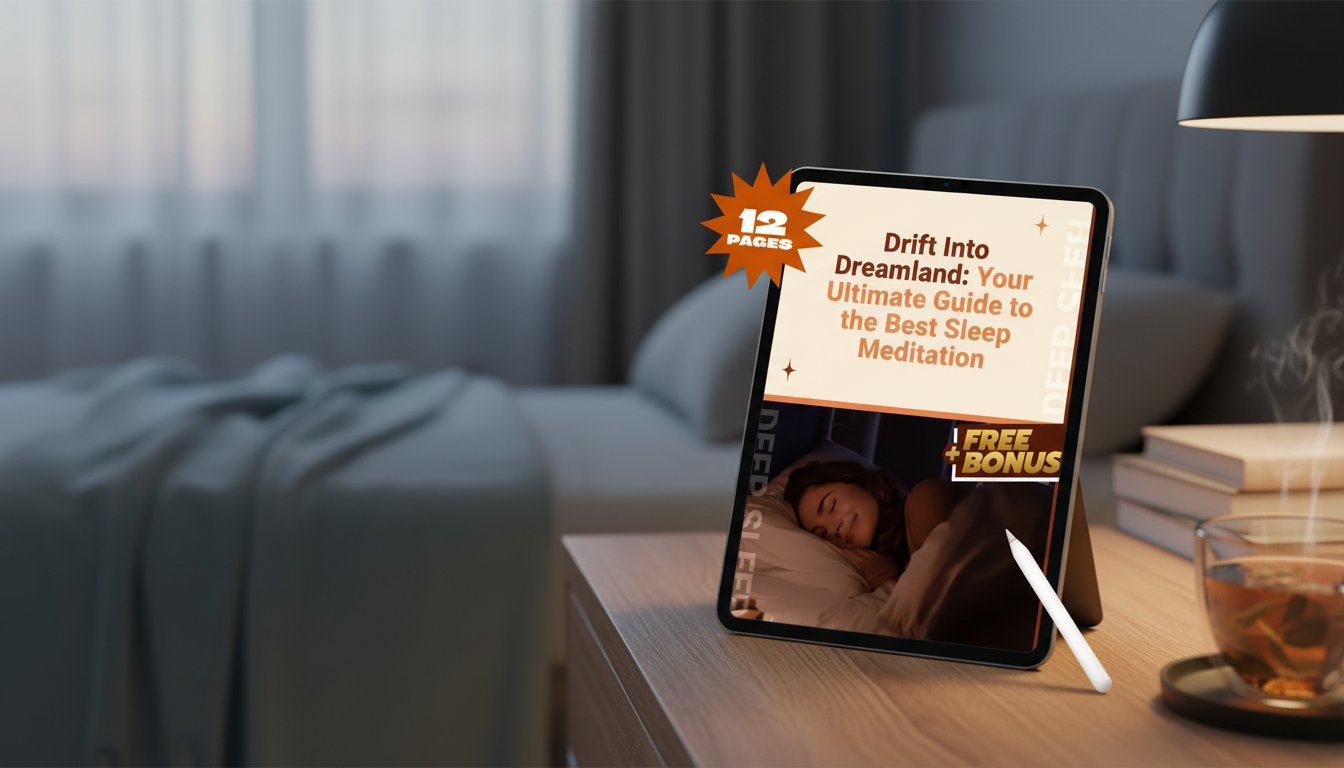
If decision fatigue is part of the problem (choosing a track, choosing a method, choosing what to do when you wake up), a written plan can make the routine easier to follow without thinking. A step-by-step option is Drift Into Dreamland: Your Ultimate Guide to the Best Sleep Meditation (digital download).
This is a flexible template you can use with or without audio. The main idea is to start structured and end soft.
Drift Into Dreamland: Your Ultimate Guide to the Best Sleep Meditation is a digital download designed to support a calmer wind-down and a more consistent bedtime practice—ideal if you prefer written steps you can revisit, highlight, or keep on your phone/tablet.
| Format | Delivery | Best for | Price |
|---|---|---|---|
| eBook (digital download) | Instant access after purchase | Building a consistent sleep meditation routine | $12.99 |
To keep it minimal, consider pairing one checklist with one meditation method rather than switching approaches every night. A simple add-on is The Relaxation Hypnosis Checklist for Clarity (digital checklist PDF).
For persistent insomnia symptoms and evidence-based care options, the American Academy of Sleep Medicine’s resources can be a useful reference: American Academy of Sleep Medicine — Insomnia resources.
Most people do well with 5–25 minutes. Starting shorter (5–10 minutes) makes consistency easier, and regular practice tends to matter more than long sessions.
That can happen at first as the mind “rebounds” when things get quiet. Try a more structured anchor like breath counting or a body scan, shorten the session, and keep expectations gentle for a week.
It can support better sleep, but it isn’t a substitute for medical care when insomnia persists. If sleep issues are ongoing or severe, consider consulting a qualified professional; CBT-I is a common evidence-based approach.












Leave a comment