
Phlegmatic personalities often thrive with calm, predictable routines—yet getting started can feel strangely heavy, especially when a task has vague expectations or too many moving parts. This guide pairs a gentle mindset reset with a step-by-step checklist approach designed to reduce overwhelm, build momentum, and keep progress steady without relying on pressure or last-minute panic.
If your natural pace is steady and peace-focused, “hustle harder” advice can feel like static. Many phlegmatic-leaning people respond best to clarity, comfort, and low-friction structure—less adrenaline, more alignment.
It can help to remember that motivation isn’t a personality “upgrade.” It’s a state shaped by needs and context. If you’re curious about the broader definition, the American Psychological Association’s overview of motivation is a useful reference point.
Before you try to “fix” motivation, make starting feel safer. This is less about discipline and more about reducing unnecessary friction.
When stress is part of the blockage, a quick reset can make action feel more accessible. The CDC’s stress coping guidance supports the idea that small, repeatable practices can help you regain steadiness.
This is the heart of the approach: start small, define “done,” and build momentum with calm repetition rather than intensity.
Write it as a simple verb + object: “Wash dishes,” “Open budget spreadsheet,” “Reply to three emails.” Avoid emotionally loaded phrases that blur the target.
Keep it measurable and small: “Sink is empty,” “Draft sent,” “Laundry moved to dryer.” Clear “done” reduces the dread of endlessness.
Make the first move almost silly: open the document, put shoes on, set a timer, gather supplies. The goal is to cross the “starting line,” not finish the race.
Set a short timer with permission to stop when it ends. For many phlegmatic personalities, that permission is what makes starting feel safe.
Pick something soothing and contained: tea, a quick shower, a short walk, or one episode after a defined checkpoint. Comfort works best when it supports your energy, not replaces the task.
| If this is happening… | It often means… | Try this gentle nudge | A quick example |
|---|---|---|---|
| Stalling because the task feels big | The first step isn’t clear enough | Shrink the first step to 2 minutes | Open laptop + title the document |
| Feeling drained before starting | The task feels emotionally uncomfortable | Add comfort + reduce exposure time | 10-minute timer + calming playlist |
| Avoiding because it’s “not urgent” | No external cue or deadline exists | Create a soft appointment | Calendar block: Tue 6:30–6:45 |
| Starting then fading quickly | Energy dips or boredom hits | Switch to a “minimum viable finish” | Put 5 items away, then stop |
| Doing nothing because choices feel endless | Decision fatigue | Pre-decide one option for a week | Same workout video Mon/Wed/Fri |
This steady, needs-supportive approach fits well with autonomy-focused motivation frameworks like Self-Determination Theory, which emphasizes motivation that grows when choices feel self-directed and realistic (see this overview).
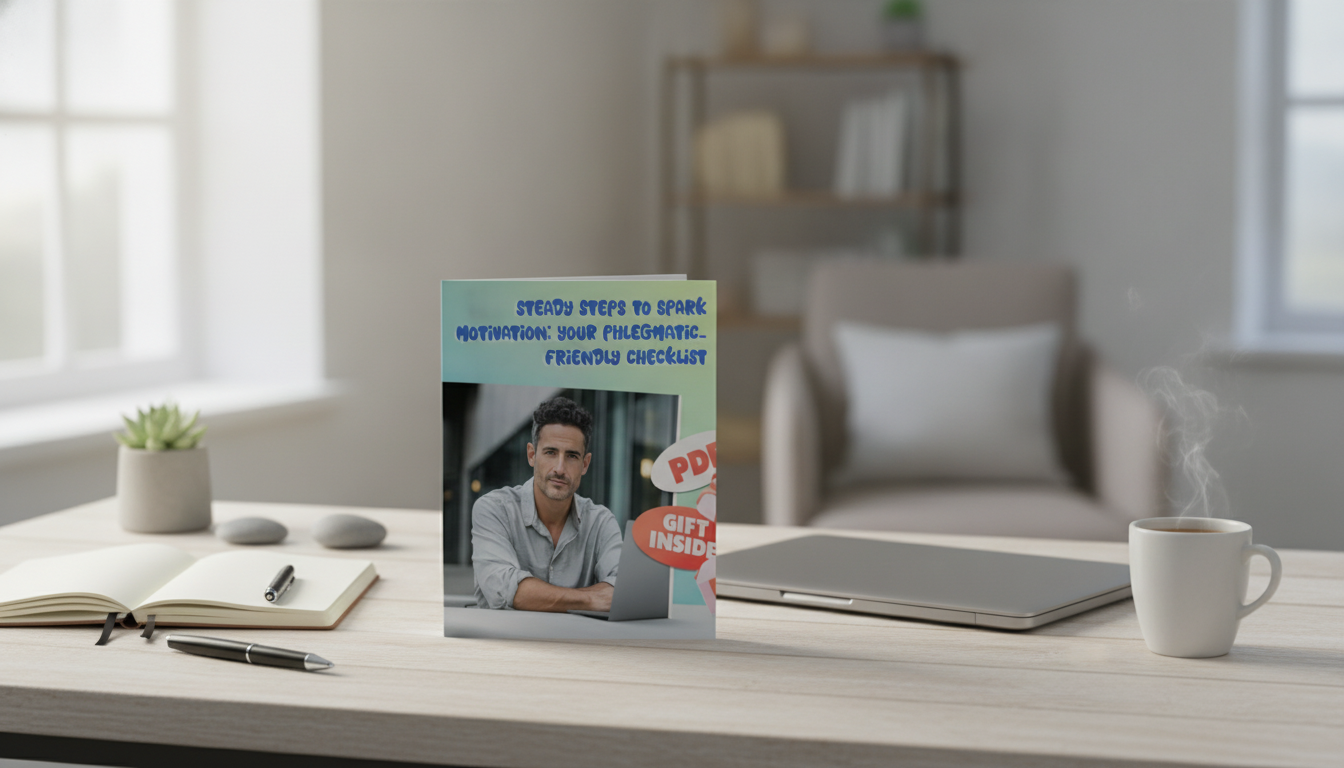
If you want the structure ready-made, Steady Steps to Spark Motivation: Your Phlegmatic-Friendly Checklist (Digital Download) is designed to keep planning calm and repeatable.
Often, urgency doesn’t register as strongly as comfort and clarity do, so vague tasks can feel heavier than important ones. When the first step is unclear—or the task feels emotionally uncomfortable—starting small creates momentum that motivation can follow.
Use gentle structure: define the next smallest step, offer two limited choices, and try a short timer with calm accountability (like co-working). Reinforcing consistency and follow-through works better than pushing for speed.
Start with 5–15 minutes and give yourself full permission to stop when the timer ends. Short, repeatable sessions build trust and habit strength more reliably than occasional long pushes.











Leave a comment