
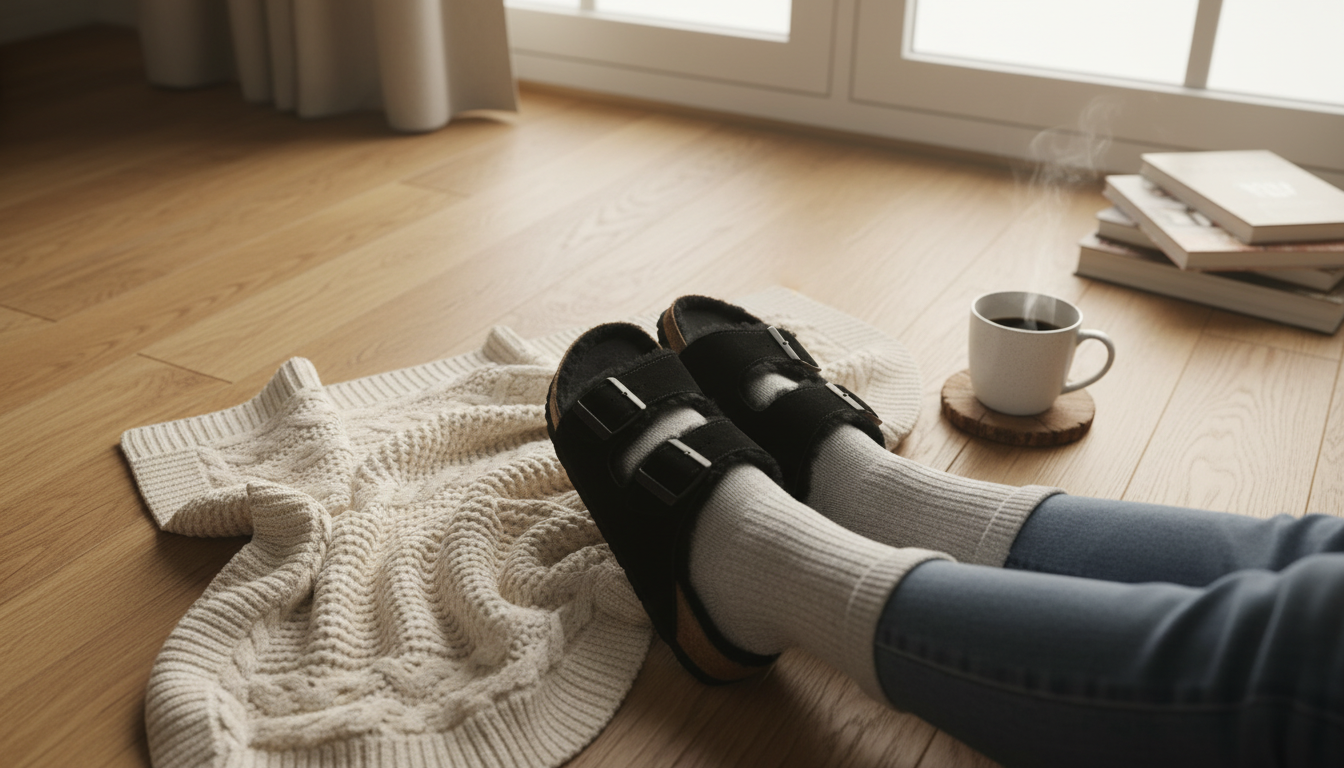
Birkenstock slippers can be good for your feet when they fit correctly and match your needs. Many styles use the brand’s contoured footbed design, which is known for supporting the arches and helping the foot sit in a more natural position than flat, unsupportive house shoes. For people who spend long hours on hard floors at home, that structure can reduce fatigue compared with thin soles or memory-foam-only slippers.
The benefits depend on getting the right size and allowing time for the footbed to break in. A supportive slipper can feel firm at first, especially if you’re used to plush cushioning. With wear, the footbed typically molds more to your foot shape, which can improve comfort and stability. If the slipper is too small, too narrow, or your toes hit the edge, even a supportive footbed won’t feel good and can create hot spots.
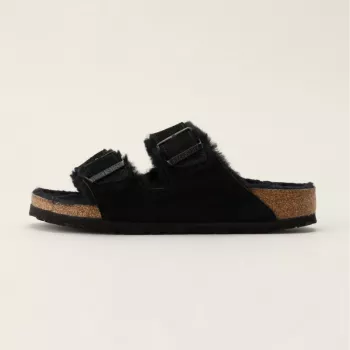
They may not be ideal for everyone. If you need extra-soft cushioning due to certain pain conditions, the firmer feel might be uncomfortable. Also, some Birkenstock slipper designs are more open and may not be the best choice if you require a fully secure heel. Materials matter too: shearling can feel cozy but warmer, while felt or suede may breathe differently depending on your home temperature.
For a deeper look at fit, support, and what to expect during break-in, see the complete guide here: https://stellardealsempire.shop/guide-birkenstock-womens-slippers-fit-support-break-in/.
For Are Birkenstock Slippers Good for Your Feet? Fit Tips, the best answer depends on fit, material, care instructions, and how the product will be used day to day.
Checking those details first helps avoid a poor match and keeps the choice practical after delivery.
Many people feel noticeable softening within 1–2 weeks of regular wear, with a more complete break-in often taking several weeks. Start with shorter wear sessions to avoid soreness as the footbed molds to you.







Leave a comment