
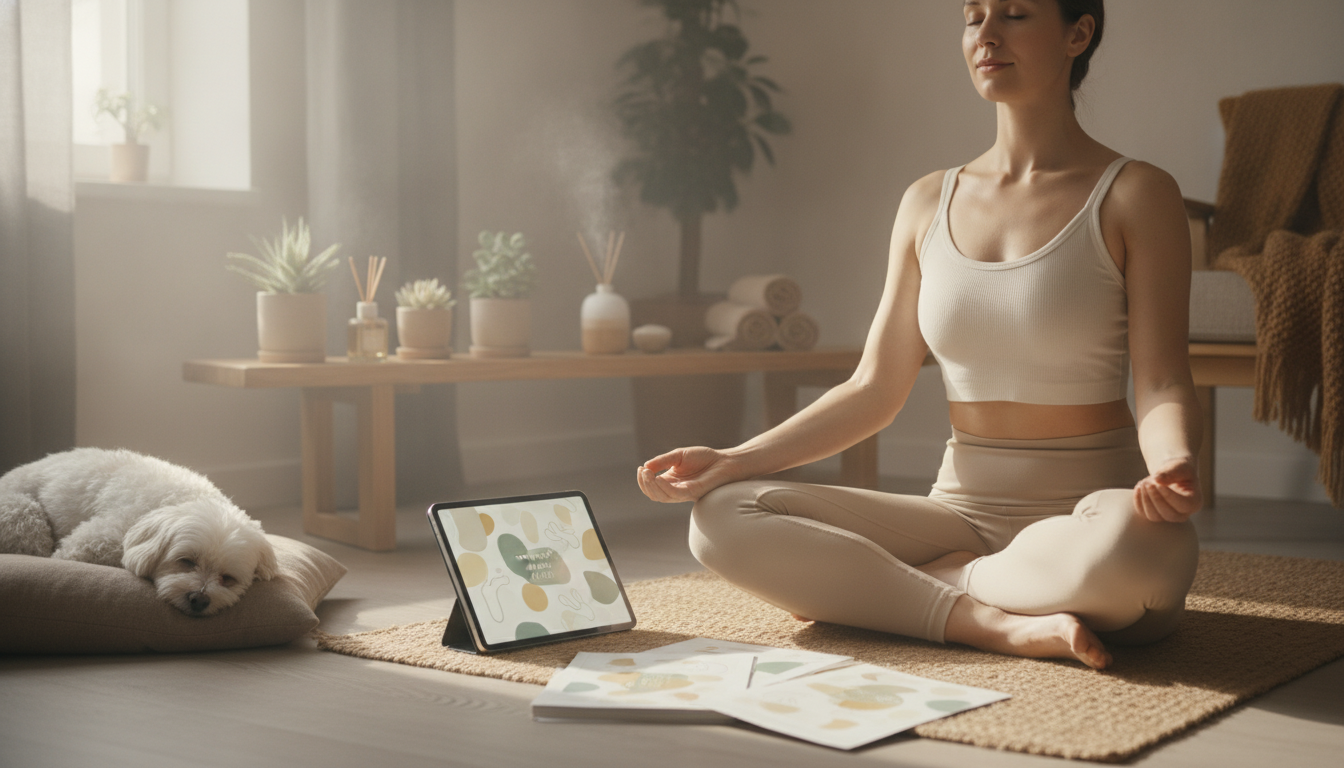
A gentle yoga wind-down can calm the nervous system, soften muscle tension, and create a steady rhythm for breath and attention. The focus here is beginner-friendly, low-intensity poses that prioritize comfort, support, and ease—ideal for evenings, stressful days, or anytime a reset is needed.
For a deeper, ready-to-follow flow you can keep on your phone or print, consider Unwind and Align: A Beginner’s Guide to Relaxing Yoga Poses (Digital Guide).
Relaxing yoga isn’t about “going deep.” It’s about choosing shapes that feel sustainable and steady—so your breathing stays smooth and your mind feels less busy by the end.
For an overview of yoga’s potential health benefits and safety considerations, the National Center for Complementary and Integrative Health (NCCIH) is a helpful reference.
| If this feels uncomfortable… | Try this support | Why it helps |
|---|---|---|
| Knees feel tender on the floor | Fold a blanket under knees or practice on a thicker surface | Reduces pressure on the kneecap and soft tissue |
| Lower back feels tight in reclined poses | Place a pillow under knees in Savasana | Lessens lumbar extension and encourages release |
| Hips feel pinchy in seated poses | Sit on a folded blanket or cushion | Tilts pelvis slightly forward to reduce strain |
| Neck feels strained lying down | Add a small towel under the head or adjust pillow height | Supports neutral neck alignment |
| Hamstrings pull in forward folds | Bend knees and elevate hips on a cushion | Protects the back and reduces over-stretching |
Breath control can help reduce the “revved up” feeling that stress creates. Harvard Health notes that breath control is a useful relaxation technique for quelling stress responses (source).
This sequence is meant to feel like turning the volume down. Move slowly, pause between shapes, and use support early—especially if you’ve had a long day at a desk or you’re carrying stress in your shoulders and hips.
| Pose | Suggested hold | Primary benefit | Make it gentler |
|---|---|---|---|
| Child’s Pose (supported) | 1–3 minutes | Soothes the back and quiets the mind | Place pillow under chest and/or between hips and heels |
| Cat–Cow (slow) | 6–10 cycles | Eases spinal stiffness and syncs breath | Make the movement smaller and slower |
| Thread the Needle | 5–8 breaths/side | Releases upper back and shoulders | Support head/shoulder with a folded blanket |
| Low Lunge (softened) | 5–8 breaths/side | Opens hips and eases sitting tightness | Keep torso upright and reduce depth |
| Seated Forward Fold (bent knees) | 8–12 breaths | Calms the nervous system and lengthens back body | Sit on a cushion and bend knees more |
| Reclined Figure-Four | 8–12 breaths/side | Gentle hip release | Keep foot on floor instead of pulling the leg in |
| Legs Up the Wall/Chair | 2–8 minutes | Restorative circulation and relaxation | Bend knees or use a chair if hamstrings are tight |
| Savasana | 3–10 minutes | Integrates and settles the body | Add support under knees and head |
If you like having everything laid out—setup cues, hold times, and gentle modifications—Unwind and Align (Digital Guide) can reduce the “what should I do today?” mental load.
For a convenient follow-along format, explore Unwind and Align: A Beginner’s Guide to Relaxing Yoga Poses (Digital Guide). After practice, comfortable slip-on footwear can make the transition into your evening routine feel easier—Birkenstock Women’s Lilac Buckle Sandals are a simple option for padding around the house.
Three to five days per week is a realistic sweet spot, and even 10 minutes daily can make a noticeable difference. Start small (10 minutes) and add time only if it helps you feel calmer, not more pressured.
Bend your knees, sit on a cushion, and reduce the range of motion until your breathing stays easy. In relaxing yoga, comfort is the goal—choose the version of the pose that feels supportive and steady.
Morning practice can set a calm tone for the day, while evening practice is great for downshifting before sleep. The best time is the one you can do consistently without rushing.









Leave a comment