
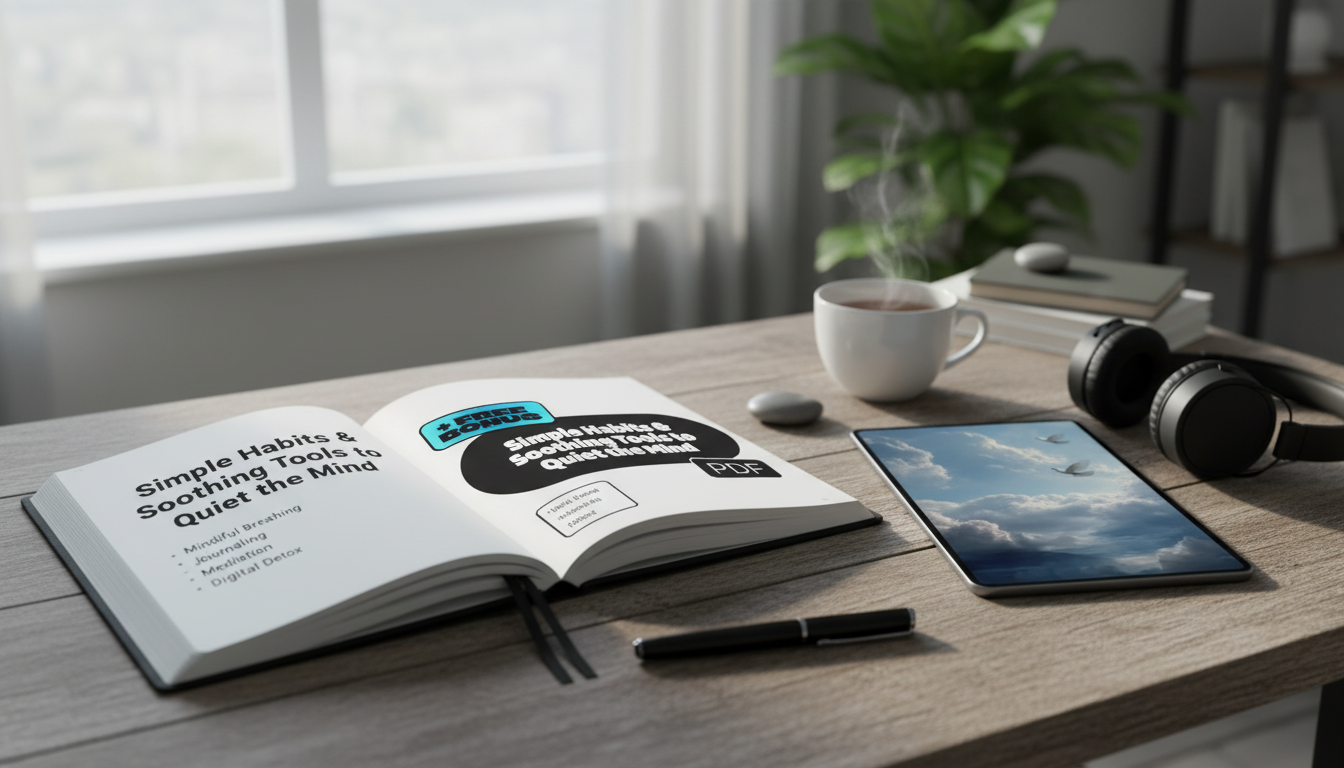
Racing thoughts and constant tension can make even small tasks feel heavy. A calmer mind often comes from small, repeatable actions that signal safety to the nervous system. The goal isn’t to “clear your mind” forever—it’s to build a steadier rhythm so your thoughts feel less gripping, your body feels more settled, and your day has more ease.
Below are practical habits and gentle tools that fit into real schedules, plus a ready-made digital resource you can keep on your phone for those moments when decision fatigue hits.
Quieting the mind usually looks less like silence and more like space. Thoughts still show up, but you feel less pulled around by them. Instead of spiraling, you can notice what’s happening and choose a next step.
When the mind is loud, it helps to follow a tiny sequence. Think: bring the body down a notch, let tension move out, then choose one small next step.
| Goal | 60–120 second option | Best time to use it |
|---|---|---|
| Regulate | 4–6 slow breaths with longer exhale | Before meetings, after doomscrolling |
| Regulate | Splash cool water on face or hold a cool drink | When agitation spikes |
| Release | Shoulder rolls + jaw unclench + tongue relax | Anytime tension builds |
| Release | Write 3 lines: “What’s loud?” “What’s true?” “What’s next?” | When thoughts loop |
| Refocus | Pick one task + set a 10-minute timer | When overwhelmed by a long list |
| Refocus | 5-4-3-2-1 grounding (senses) | When feeling scattered or panicky |
Sensory cues are powerful because they give your brain a concrete signal: “Right now is safe enough.” Choose what feels settling (not what you think you “should” like).
Consider building a “calm corner” kit: one tactile item, one sound option, and one grounding prompt. The less you have to decide in the moment, the more likely you’ll use it.
Lasting calm is often the result of basics done consistently. These habits aren’t flashy, but they steadily reduce the background stress load.
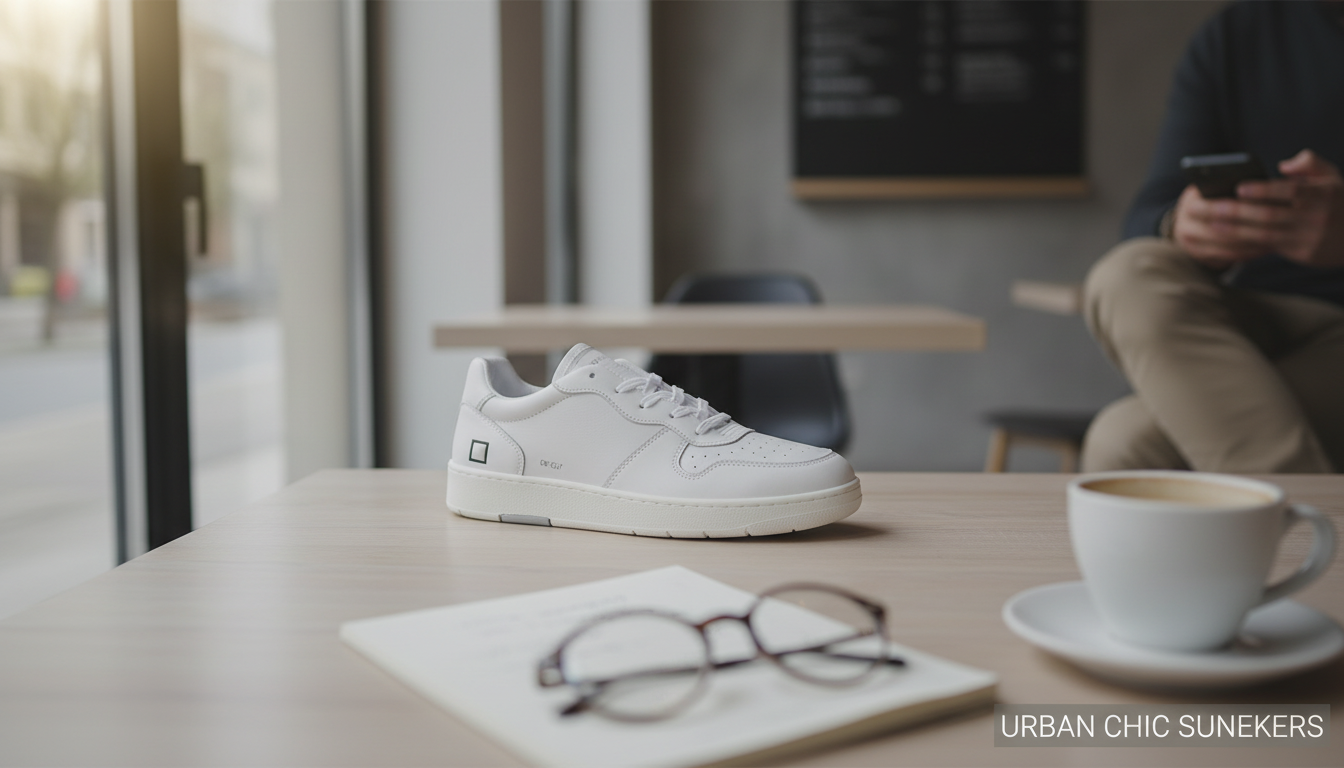
For a walking reset, supportive footwear can make the habit easier to repeat—especially if you’re aiming for short, frequent walks instead of one big workout. If you’re building a daily “step outside” practice, take a look at Adidas Men’s Beige Streetwear Sneakers as a comfortable option for quick loops around the block.
For more background on anxiety and common symptoms, the National Institute of Mental Health and the American Psychological Association offer trustworthy overviews.
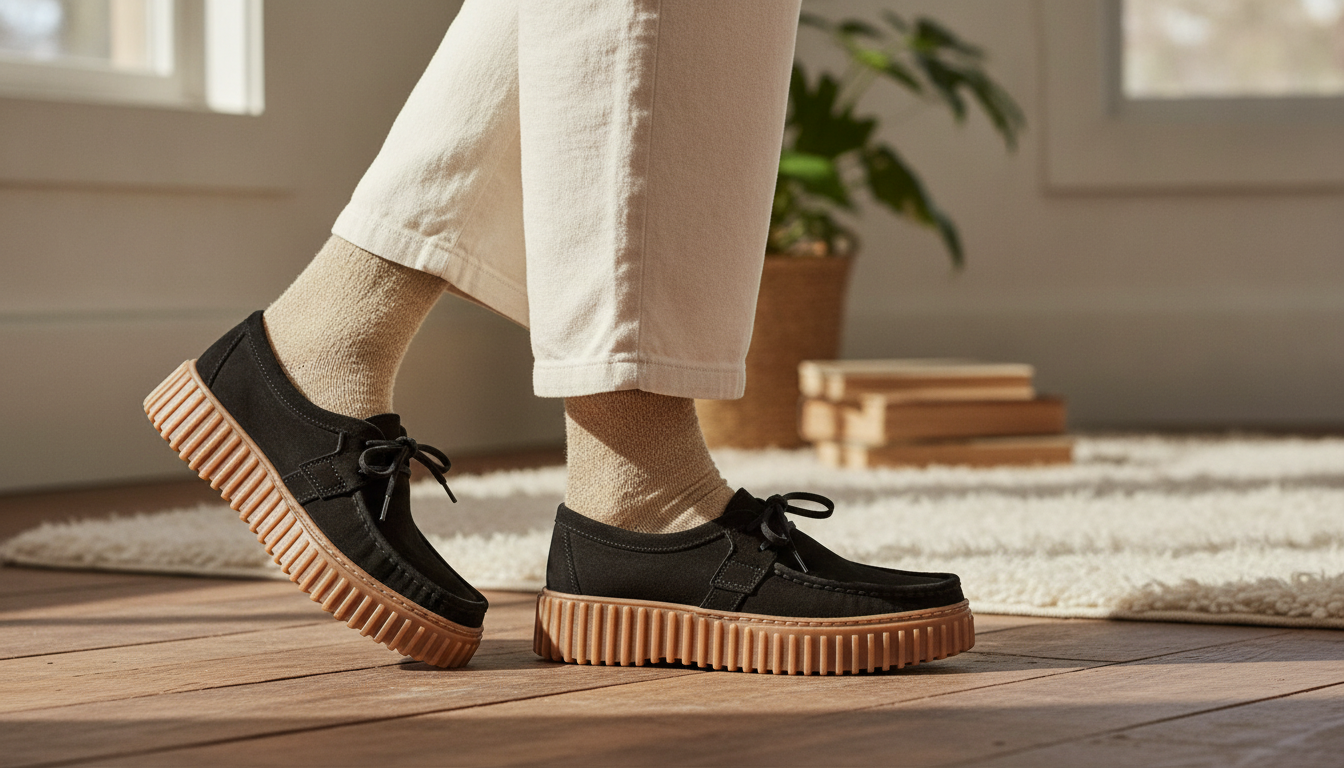
For a simple “transition ritual” at the end of the day, comfortable at-home gear can help signal downshift time. If cozy routines include warm socks and stepping outside briefly, supportive boots like Dr. Martens Women’s Black Leather Ankle Boots with Rubber Sole can make a quick evening walk feel more doable in cooler weather.
Try one: longer-exhale breathing (inhale gently, exhale longer), 5-4-3-2-1 grounding, a quick temperature change (cool water), 30–60 seconds of movement, or a 10-minute single-task timer. Pick a single option and repeat it for a couple minutes rather than bouncing between techniques.
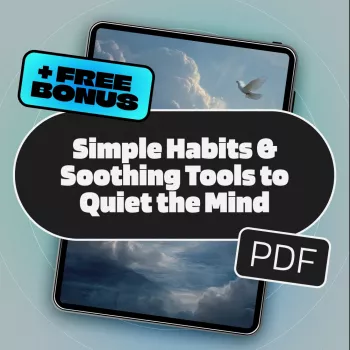
A digital download can act like a portable reference when your mind is overwhelmed, offering structured routines, prompts, and checklists that reduce decision fatigue. Keeping it on your phone makes it easy to revisit during high-stress moments.
Brief daily practice plus a few micro-resets throughout the day is a realistic starting point. Many people notice small shifts within days and more stable change over a few weeks when habits stay consistent and simple.









Leave a comment